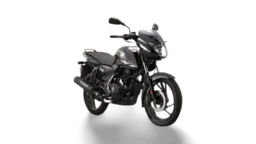
Bajaj Auto has introduced the new Pulsar 125 and Pulsar 150 models in India with upgraded engines, new hardware and a much longer list of features. The price of the Pulsar 125 begins at ₹92,990, while the Pulsar 150 starts at ₹115,233. All prices are ex-showroom.
Pulsar's newest models are designed for people looking for more than just commuter-bike features. On select variants, Bajaj has introduced features like ride modes, Crawl Tech, monoshock suspension and 5-inch TFT displays with Google Maps navigation. It's an interesting strategy, because some of these features are becoming much more common even in fairly inexpensive motorcycles.
Bajaj Pulsar 125, Pulsar 150: Price and variants
The Pulsar 125 comes in four different types. Prices start at ₹92,990 for the base version and go up to ₹104,318 for the Premium Split Seat variant. The STD Single Seat and STD Split Seat versions cost ₹99,291 and ₹100,288, respectively.
The Pulsar 150 is available in three different variants. The Single Disc model costs ₹115,233, while the Twin Disc Single Seat and Twin Disc Split Seat versions are priced at ₹122,184 and ₹123,187, respectively.
New engines focus on Low-RPM performance
The new Pulsar 125 makes 11.7bhp, Bajaj says, as opposed to 13.6bhp for the Pulsar 150. Both bikes transfer 85 per cent of their peak power at 3,000 rpm and above, the company claims.
Bajaj has also updated the gearbox to boost low-speed tractability. The motorcycles have deeper gear bevels, which are claimed to reduce the need for frequent clutch inputs. This won't be helpful in urban traffic, where it is not about maximum power but low-speed performance is key.
The larger move is in Crawl Tech. It helps the motorcycle ride slowly while you do not have to press the throttle frequently. Bajaj claims the system helps to ease the clutch and throttle input while also minimising the risk of stalling during crawling traffic.
More technology on affordable Pulsars
The selected models of the Pulsar 125 feature three riding modes: road, rain and sport. These modes are found throughout the Pulsar 150's range. The high-power level of the ride modes on bikes with this kind of power might seem like too much, but they could provide Bajaj with a valuable technological edge over commuter motorcycles.
The higher variants are also equipped with a 5-inch TFT display with a Google Maps navigation system, LED indicators, hazard lamps and an Integrated Starter Generator (ISG). The base Pulsar 125 gets a coloured LCD, LED headlamp, monoshock suspension and Crawl Tech but misses out on ride modes and TFT display.
Motorcycles now have monoshock rear suspension. There's also a USB Type-C charging port.
Overall, Bajaj seems to be leveraging technology to make Pulsar 125 and 150 look more premium than they actually are. The base variants remain relatively simple, whereas the more powerful models have some capabilities that were only found on much costlier bikes in the past. Whether these additions make riding more enjoyable and worth the extra money will be the real question.


 Grab Offer Now