
FSSAI moves to stop dairy analogues from being sold as paneer
This comes against the backdrop of concerns regarding the rising use of ‘paneer analogue’— a cheaper substitute mainly made from palm oil, milk powder, starch, and emulsifiers, instead of fresh milk.


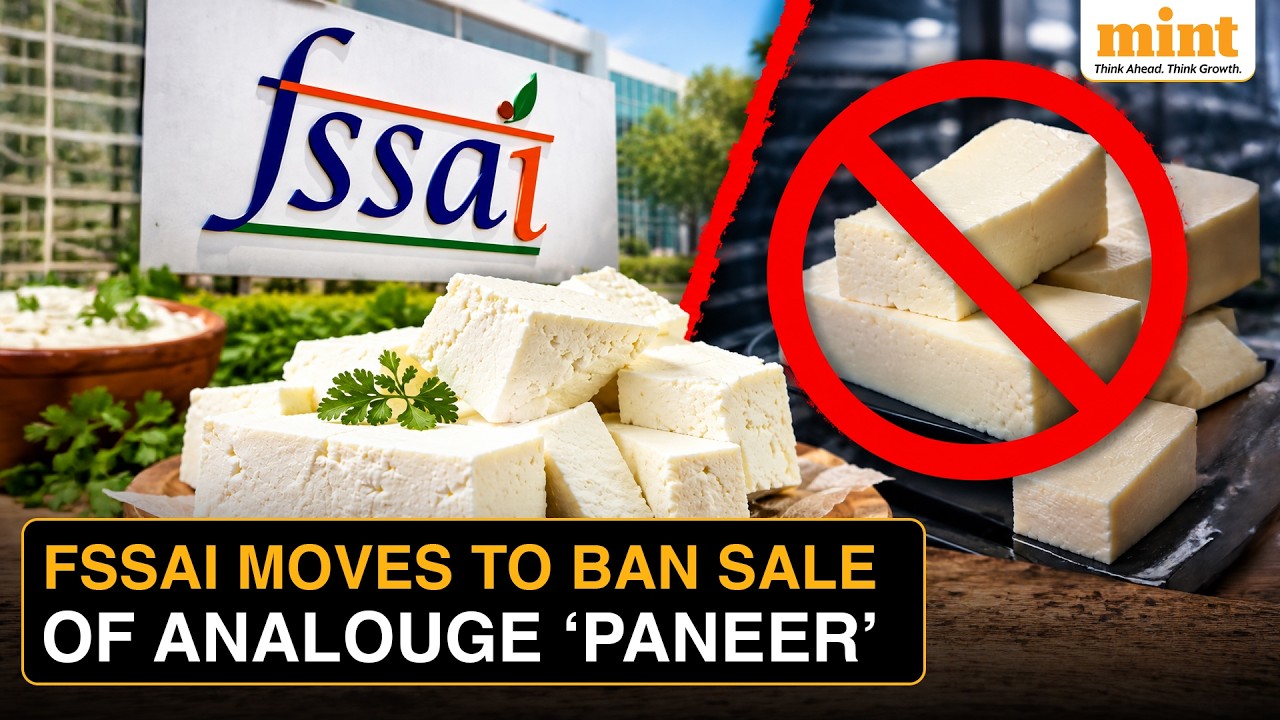
New Delhi: The food safety regulator has proposed barring manufacturers from using the word “paneer” on labels or in advertisements for products made without milk, in a move aimed at preventing consumers from being misled about what they are buying.
The Food Safety and Standards Authority of India's (FSSAI) proposal, issued in a draft notification on 23 September, covers products currently licensed or registered under the “analogue paneer" in the dairy context category.
FSSAI has invited suggestions on the draft for 60 days. The proposed restriction will take effect only after the rules are finalized and notified. category.
Under the proposed rule, products made from non-milk ingredients would not be allowed to use “paneer” in their product names, labelling or marketing.
This comes against the backdrop of concerns regarding the rising use of ‘paneer analogue’— a cheaper substitute mainly made from palm oil, milk powder, starch, and emulsifiers, instead of fresh milk. Designed to mimic the texture and appearance of authentic paneers, analogue paneers are increasingly used in food preparations but lack the quality and nutritional value of dairy-based food.
Mint first reported on 28 April 2025 that the Department of Consumer Affairs was considering a requirement for restaurants and eateries to clearly tell customers whether they were serving genuine paneer or “paneer analogue”. Mint also reported on 4 May 2026 that the government planned to prohibit analogue paneer and similar dairy imitations.
“The main concern with analogue paneer is that its nutritional value can be different from milk-based paneer…regular consumption of such products, particularly by people with diabetes, obesity or other metabolic conditions, can therefore affect the overall quality of their diet,” said Dr Anand Vishal, senior endocrinologist at the Atal Bihari Vajpayee Institute of Medical Sciences.
Paneer is an important source of protein for north Indians in particular, spurring India's $10.8 billion paneer market, according to market research company IMARC. The firm has projected that the Indian paneer market will reach $22.1 billion by 2033, growing at a compound annual growth rate (CAGR) of 8.7% during the forecast period (2024–2033).
“There are broadly two kinds of merchants who sell analogue paneer. Some were not declaring that it was analogue paneer because they didn't know themselves, while others could not afford to buy real paneer at the prevailing prices,” said Pranav Rungta, vice-president of the National Restaurant Association of India and director at Mumbai-based Churchgate Hospitality, which operates restaurants including Nksha, Fieno, Otoki and Tamak.
“In many cases, it was more a question of ignorance and price sensitivity than deliberate deception. The lower-end consumer is also price-sensitive, and there has been customer acceptance of cheaper alternatives across categories, whether it is analogue paneer, frozen desserts or products such as Neutralite. Naturally, if these alternatives are no longer available, prices will have to increase.”
The issue needs to be addressed at the source. If manufacturers are prevented from producing or supplying such products where they are not permitted, they cannot make their way to restaurants and consumers, he said.
“The organised sector was not really the challenge. If more organised players, such as Milky Mist, enter the category and offer these products transparently, there will be more consumer acceptance. Ultimately, we are not intentionally looking to buy cheaper alternatives. Real paneer costs us around ₹350-500 a kg, compared with around ₹180-200 a kg for the alternatives. If the alternatives are banned in a particular state, then obviously they cannot be sold there.”
Anshul Singh, team lead, clinical nutrition and dietetics department, Artemis Hospital, Gurugram, said the regular use of adulterated products can create health risks for children, older adults and those with pre-existing health conditions.
About the Authors
Dhirendra Kumar is a seasoned policy reporter with about 20 years of experience in deep, on-ground reporting across key economic and governance sectors. His work spans finance, public expenditure, disinvestment, public sector enterprises, textiles, trade, consumer affairs, and agriculture, with a strong focus on uncovering structural policy shifts and their real-world impact.<br><br>Kumar has been awarded the Chaudhary Charan Singh Award for Excellence in Journalism in Agricultural Research and Development, recognising his contribution to reporting on critical issues in the farm sector. He has also been a recipient of a fellowship in international trade from the National Press Foundation, which has further strengthened his coverage of global trade dynamics and their implications for India.<br><br>Kumar is known for breaking complex policy developments into clear, accessible stories. His reporting focuses on uncovering under-reported trends, explaining policy shifts, and helping readers stay informed about developments that shape India’s economic landscape.
Varuni Khosla is a journalist with Mint, where she covers the consumer economy with a focus on hospitality and tourism, luxury, the business of sports, art, and the alcohol and food and beverage industries. Based in New Delhi, she reports on how brands and cultural sectors grow, shape consumer demand and compete in one of the world’s fastest-evolving markets.<br><br>Varuni has been a journalist since 2009 and brings more than 17 years of experience reporting on India’s business landscape. She specialises in covering the industries shaping India’s consumption economy, and is widely recognised as a key voice in these areas.<br><br>Over the years, she has closely tracked the rise of India’s luxury and hospitality sectors, the transformation of advertising and marketing as brands respond to digital platforms and changing audiences, and the economics of sport, from sponsorships and leagues to the expanding commercial ecosystems around teams, athletes and media rights. Her reporting on the business of art explores the growing global market for South Asian art and the role of collectors, galleries and auction houses.<br><br>Her stories frequently draw on exclusive conversations with founders, executives and industry leaders, combining market data with on-the-ground reporting to offer readers insight into the companies and trends shaping India’s evolving consumption economy.
Catch all the Industry News, Banking News and Updates on Live Mint. Download The Mint News App to get Daily Market Updates.
MoreWait for it…
Oops! Looks like you have exceeded the limit to bookmark the image. Remove some to bookmark this image.